




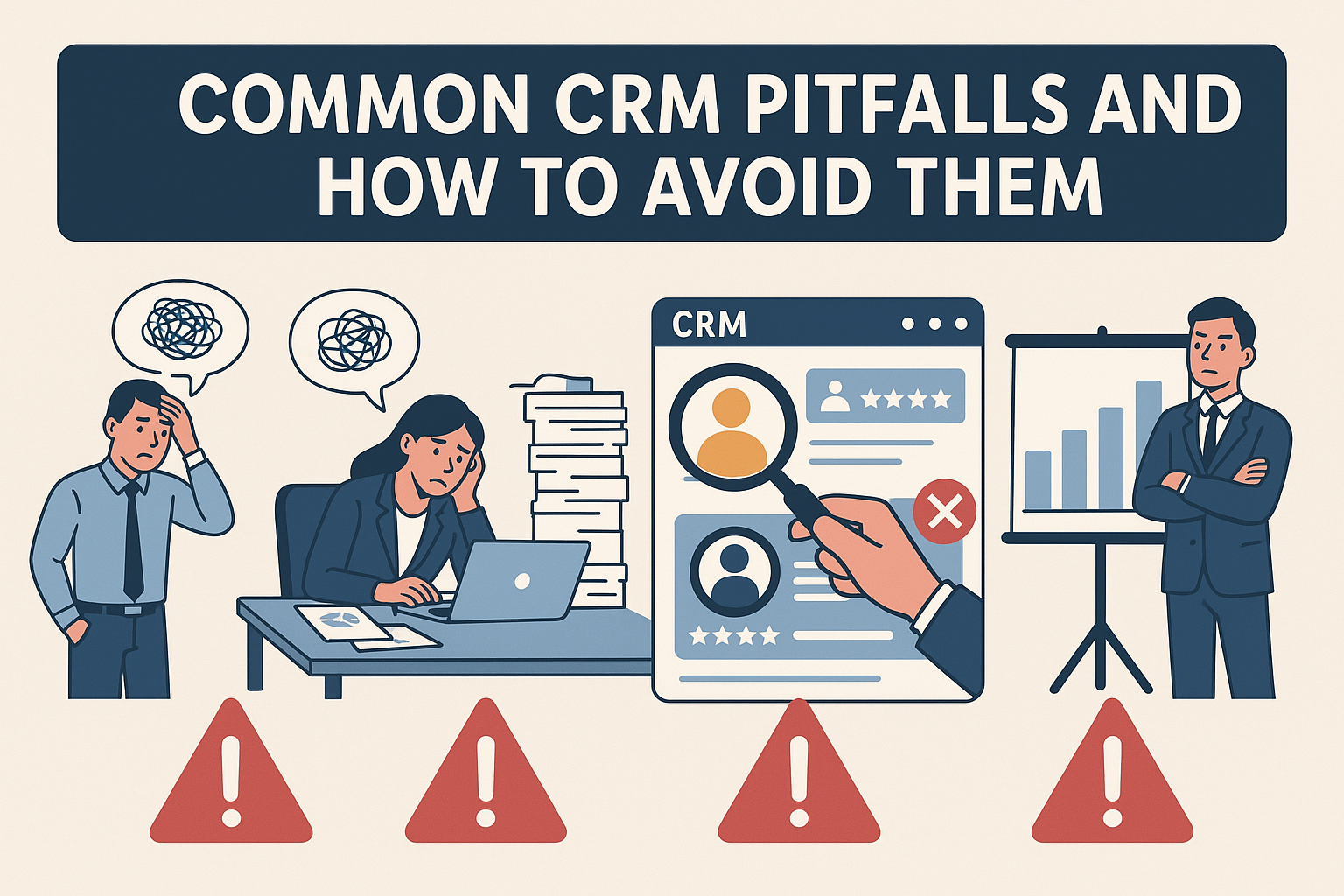
Common CRM Pitfalls and How to Avoid Them
Customer Relationship Management (CRM) systems have transformed how businesses manage their relationships with clients and prospects. However, implementing a CRM is not a panacea. Many organizations face hurdles that can impede their CRM success. Here, we delve into common pitfalls associated with CRM systems and provide actionable strategies for navigating these challenges.
1. Lack of Clear Objectives
One of the most significant pitfalls is the absence of clear goals and objectives. Organizations often dive into CRM implementation haphazardly, leading to confusion and misalignment of business strategies.
Solution: Define your objectives before implementing a CRM system. What problems are you hoping to solve? Are you aiming for better customer segmentation, improved sales reporting, or streamlined customer service? Use SMART criteria (Specific, Measurable, Achievable, Relevant, Time-bound) to set clear goals.
2. Inadequate User Training
Many organizations fail to invest adequately in training their team members. A sophisticated CRM system can become a “black hole” of data if employees do not know how to use it effectively.
Solution: Invest in robust training programs tailored to different user roles. Regular training sessions and refresher courses are essential. Additionally, consider appointing CRM champions within teams who can help support and guide others.
3. Poor Data Quality
Data is the lifeblood of any CRM system; poor data quality can result in faulty insights and impaired decision-making. Issues like duplicate records, outdated contact information, and incorrect data entries can plague an organization.
Solution: Regularly cleanse and validate your data. Implement data governance practices to ensure accuracy and consistency. Automate data entry where possible to reduce human error and encourage your team to follow protocols for maintaining data integrity.
4. Neglecting User Adoption
A CRM is only as useful as its users’ willingness to adopt it. If team members resist using the system, it may lead to fragmented customer data and missed opportunities.
Solution: Foster a culture that encourages CRM usage by emphasizing its benefits. Solicit feedback from users to improve the system and demonstrate how it directly enhances their work—whether through ease of access to information or improved customer interactions.
5. Overcomplicating the System
Many organizations believe that a complex system with myriad features will serve them better. However, this often leads to confusion and frustration.
Solution: Keep it simple. Choose a CRM platform that aligns with your actual needs. Focus on essential features that support your primary goals. As your requirements evolve, you can always expand functionalities rather than begin with an unnecessarily complex system.
6. Failing to Integrate with Other Systems
Isolation is another common pitfall. If a CRM system isn’t well-integrated with other tools and platforms such as email marketing, sales software, or customer support systems, it can create silos of information.
Solution: Choose a CRM that allows easy integration with other tools you use. Regularly evaluate your technology stack and consider adopting a comprehensive solution that can handle multiple functionalities under one umbrella.
7. Ignoring Mobile Access
In today’s fast-paced business environment, having mobile access to CRM systems is essential. Managers and sales teams often need data on the go, and a failure to provide mobile functionality can hinder productivity.
Solution: Opt for a CRM system that offers robust mobile apps or mobile-optimized interfaces. Ensure that these mobile capabilities don’t compromise data security or user experience.
8. Not Measuring and Analyzing Results
Organizations can easily overlook the measurement of their CRM’s effectiveness. Failing to analyze results limits understanding of what’s working and what isn’t.
Solution: Regularly track and analyze key performance indicators (KPIs) linked to your CRM goals. Use dashboards to visualize data from your CRM, making it easier to assess performance over time. Adjust your strategies based on these insights to continuously improve.
9. Underestimating Implementation Time
Many organizations misjudge the time required to implement a CRM, leading to rushed setups and problems down the line.
Solution: Create a comprehensive implementation timeline, allowing for potential setbacks. Be realistic about the phases of the project and prioritize thoroughness over speed. This includes having adequate resource allocation and establishing cross-department collaboration.
10. Overlooking Customer Feedback
Finally, many organizations make the mistake of ignoring customer feedback in their CRM strategy. Customer insights are invaluable for refining processes and improving service.
Solution: Regularly gather and analyze customer feedback through surveys, interviews, and reviews. Use this information to adapt your CRM approach to better meet customer needs and expectations.
Conclusion
While CRM systems have the potential to revolutionize how businesses interact with their customers, avoiding these common pitfalls is essential for maximizing their benefits. By setting clear objectives, training team members, maintaining data quality, and focusing on user adoption, organizations can enhance the efficiency of their CRM systems and ultimately foster stronger customer relationships.
FAQs
Q1: What is a CRM system?
A: A Customer Relationship Management (CRM) system is a software solution that helps businesses manage interactions with current and potential customers. It consolidates customer information, automates marketing and sales processes, and provides analytics to improve customer relationships.
Q2: How can I choose the right CRM software for my business?
A: Identify your specific needs, such as features required, budget constraints, and user-friendliness. Consider requesting demos, reading reviews, and ensuring compatibility with other tools you use.
Q3: How often should I clean my CRM data?
A: Regularly review and clean your CRM data at least once a quarter. However, set up processes to monitor data quality continuously to prevent issues from arising.
Q4: Why is user training essential for CRM adoption?
A: Proper user training ensures employees understand how to utilize the CRM system effectively, minimizing errors and promoting consistent usage, ultimately leading to better data and insights.
Q5: Can CRM systems be tailored to fit different industries?
A: Yes, many CRM systems offer customizable features and flexible configurations to cater to the unique needs of various industries, from retail and technology to healthcare and finance.
By avoiding these pitfalls and implementing best practices, organizations can leverage their CRM systems to enhance customer relationships, drive revenue growth, and achieve long-term success.