
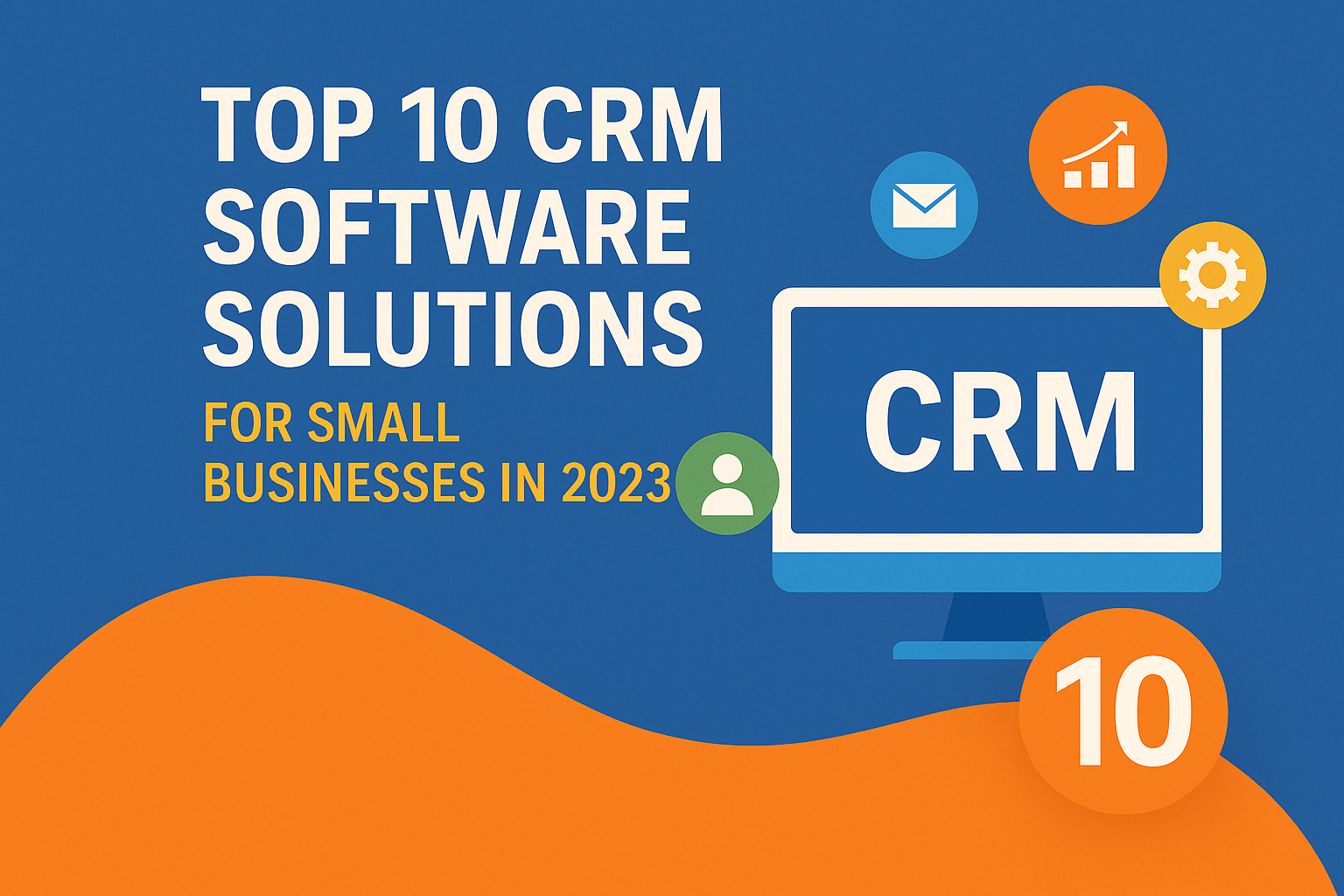
In today’s fast-paced business environment, effective customer relationship management (CRM) is essential for small businesses aiming to grow and thrive. The right CRM software helps these businesses streamline processes, improve customer interactions, and analyze data to make informed decisions. As we navigate through 2023, here are the top ten CRM software solutions tailored for small businesses.
1. HubSpot CRM
Overview
HubSpot CRM is a popular choice among small businesses due to its user-friendly interface and robust features. It offers a free basic version that provides essential tools for managing contacts, tracking sales, and analyzing performance.
Benefits
- User-Friendly: Intuitive design allows for easy navigation.
- Integrations: Seamlessly integrates with other HubSpot tools and third-party applications.
- Automation: Offers automation for email marketing and follow-up tasks.
2. Salesforce Essentials
Overview
Salesforce Essentials is designed specifically for small businesses. It combines the power of Salesforce’s extensive features with a simpler interface tailored for smaller teams.
Benefits
- Customization: Highly customizable dashboards and reports.
- Scalability: Grows with your business needs.
- Access to AppExchange: A wide range of integrations via Salesforce’s AppExchange marketplace.
3. Zoho CRM
Overview
Zoho CRM offers a comprehensive suite of features at an affordable price point. Ideal for small businesses, it combines automation with analytics to help improve sales processes.
Benefits
- Affordable: Competitive pricing, especially for startups.
- Multi-Channel Communication: Engage customers through various channels, including email, social media, and calls.
- AI-Powered Insights: Provides predictive analytics and recommendations.
4. Pipedrive
Overview
Pipedrive is a sales-focused CRM designed to help small teams manage their pipeline efficiently. The visual interface makes tracking sales activities straightforward.
Benefits
- Sales Automation: Automates repetitive tasks, allowing your sales team to focus on closing deals.
- Visual Pipeline Management: Intuitive visual layout to manage deal stages.
- Customization Options: Easily customizable features and workflows.
5. Freshsales
Overview
Freshsales, by Freshworks, provides a comprehensive set of features that include email tracking, lead scoring, and a built-in phone system, making it ideal for small businesses.
Benefits
- Lead Management: Effective lead scoring and categorization systems.
- Built-in Communication: Integrated calling and email capabilities.
- AI-Powered Insights: Offers AI-driven insights for smarter decision-making.
6. Keap (formerly Infusionsoft)
Overview
Keap is tailored for small businesses focusing on sales and marketing automation. It integrates CRM capabilities with marketing tasks to create effective campaigns.
Benefits
- Marketing Automation: Helps automate campaigns, follow-ups, and lead nurturing.
- E-Commerce Capabilities: Includes payment processing and sales features.
- Customer Engagement: Creates personalized engagement through various communication channels.
7. Nimble
Overview
Nimble is a social CRM that emphasizes relationship-building over traditional sales processes. It’s ideally suited for small businesses wanting to leverage social media.
Benefits
- Social Media Integration: Works well with various social platforms for better customer engagement.
- Rich Contact Profiles: Aggregates information from different sources for complete profiles.
- Lightweight and Intuitive: Simple design makes it easy to use.
8. Agile CRM
Overview
Agile CRM offers a robust feature set while being accessible at a low price point. It focuses on automation to help small businesses save time.
Benefits
- Free Plan Available: A robust free tier for small teams.
- Marketing Automation: Helps streamline marketing efforts with email and social media campaigns.
- Contact Management: Provides detailed contact profiling and segmentation.
9. Bitrix24
Overview
Bitrix24 combines CRM with project management and collaboration tools. It’s suitable for small businesses that need comprehensive functionality without the high costs.
Benefits
- Free Tier: A highly capable free version for teams looking to save costs.
- Collaboration Tools: Offers chat, task management, and project planning.
- Versatile Features: Provides websites, file storage, and more.
10. SugarCRM
Overview
SugarCRM is well-known for its flexibility and customization options. While it can be more complex, it offers powerful tools for small businesses ready to invest in their CRM strategy.
Benefits
- Customization: Highly customizable platform to fit specific business needs.
- Robust Analytics: Strong reporting capabilities provide valuable insights.
- Mobile Access: Mobile app enables on-the-go access to information.
Conclusion
Choosing the right CRM software is crucial for small businesses looking to strengthen customer relationships and drive growth. The top ten CRM solutions listed above offer varying features and pricing options to suit different business needs in 2023. By implementing the right CRM, small businesses can enhance productivity, improve customer service, and ultimately increase their bottom line.
FAQs
1. What is CRM software?
CRM software is a tool used by businesses to manage their interactions with current and potential customers. It helps in organizing, automating, and synchronizing sales, marketing, and customer service activities.
2. Why is CRM important for small businesses?
CRM is crucial for small businesses as it helps improve customer relationships, streamline processes, boost sales productivity, and provide insights into customer preferences and behaviors.
3. Can I find free CRM solutions for my small business?
Yes, several CRM solutions offer free versions with essential features, such as HubSpot CRM and Agile CRM, perfect for startups and small businesses on a budget.
4. How do I choose the right CRM for my business?
Consider factors such as pricing, features, ease of use, scalability, customer support, and integration options. It can be beneficial to take advantage of free trials to see which software fits your needs best.
5. Is CRM software scalable?
Many CRM solutions, like Salesforce and Zoho, are designed to scale as your business grows. They offer various plans and features that cater to both small teams and large organizations.
6. How much does CRM software typically cost?
Prices vary widely among different CRM solutions, ranging from free versions to monthly subscriptions of $25-$300 per user, depending on features and services.
7. Are CRM systems secure?
Most reputable CRM providers prioritize data security with various protective measures, including encryption, data backups, and compliance with regulations. Always check the security protocols of the CRM you’re considering.
8. Can CRM software improve sales?
Absolutely! By automating repetitive tasks, providing insights into customer data, and allowing for better follow-up processes, CRM software can significantly enhance sales performance and customer satisfaction.