

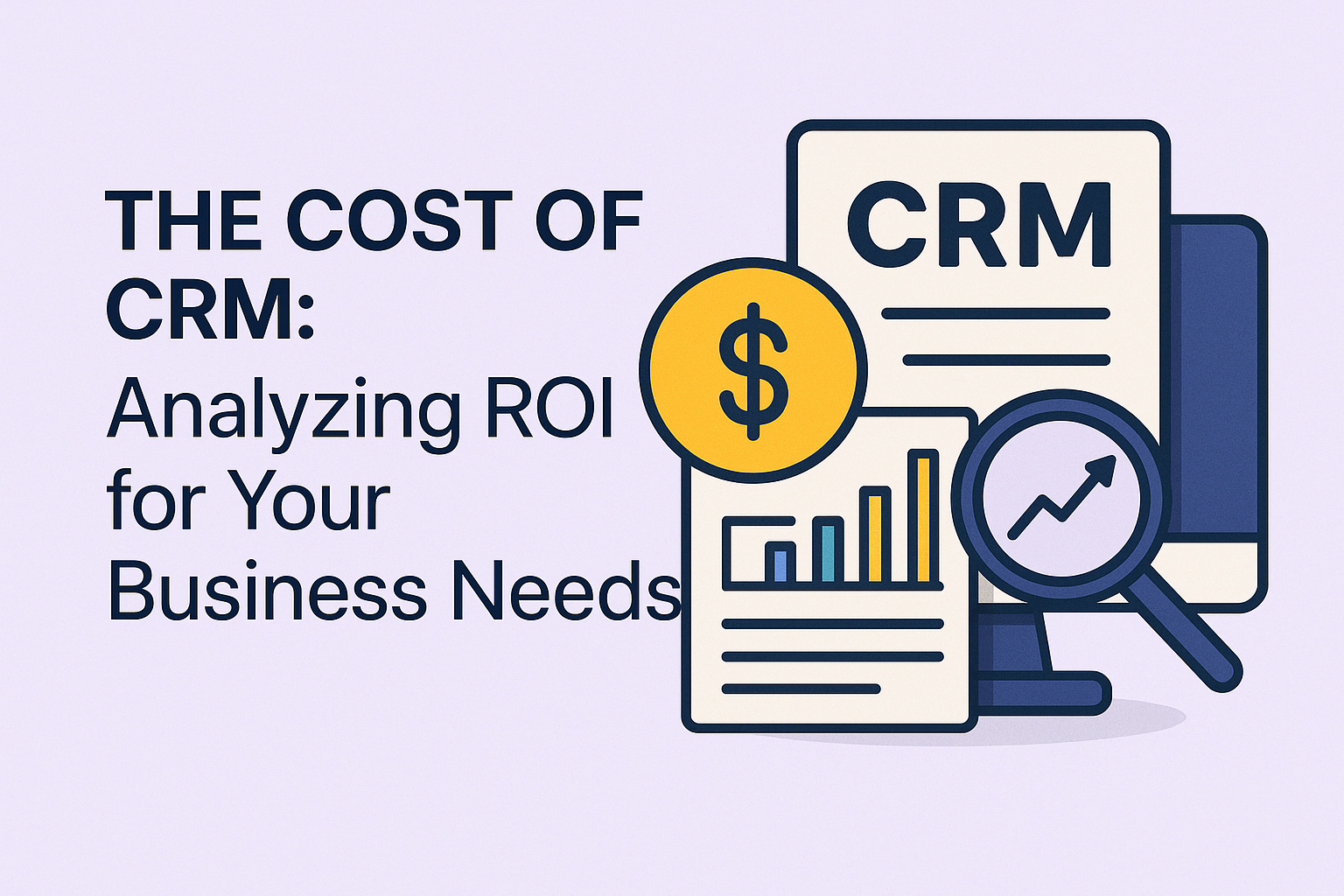
Customer Relationship Management (CRM) systems are essential tools for businesses looking to understand and enhance their interactions with customers. While investing in a CRM solution can be costly, understanding the Return on Investment (ROI) associated with it is crucial for making informed business decisions. In this article, we will explore the costs associated with CRM systems, factors influencing ROI, and how businesses can effectively analyze their CRM investments.
Understanding CRM Costs
When considering a CRM system, it’s important to break down the costs involved. While these can vary significantly depending on the size of the business and the complexity of the CRM solution, they typically fall into several categories:
1. Initial Investment Costs
- Software Licensing Fees: Most CRM systems charge a recurring subscription fee, which can range from $12 to $300 per user per month, depending on the tier and features chosen.
- Implementation Costs: Setting up your CRM can involve consulting fees, data migration, and integration with existing systems. These costs can add up quickly, often ranging from a few thousand to tens of thousands of dollars.
2. Training and Support
- User Training: Investing in a CRM solution will often require training for your team. Trainer costs can vary, depending on whether you utilize vendor support or third-party consultants.
- Ongoing Support: Many CRM providers offer ongoing support plans which can be an additional monthly or yearly cost.
3. Operational Costs
- Maintenance and Upgrades: Regular maintenance, updates, and upgrades are necessary for keeping your CRM running smoothly, especially with cloud-based solutions where hosting costs are included.
4. Hidden Costs
- Data Management: Having to clean and prepare data for the CRM can incur additional labor costs.
- Time Investment: Employees need to spend time reviewing processes and adapting to new systems, which could affect productivity.
Determining ROI in CRM Implementations
To evaluate the effectiveness of your CRM investment, you need to analyze the ROI. This involves assessing both tangible and intangible benefits alongside the costs incurred.
1. Tangible Benefits
- Increased Sales: Many businesses experience a direct increase in sales as a result of enhanced customer insights and streamlined processes.
- Improved Efficiency: Automation of routine tasks can free up employees’ time to focus on higher-value activities, resulting in cost savings.
- Customer Retention: Effective CRM systems can help businesses retain customers by providing excellent service, which lowers acquisition costs.
2. Intangible Benefits
- Enhanced Customer Insight: CRM systems offer valuable data that can shape strategic business decisions, even if the financial effect is harder to quantify.
- Improved Customer Satisfaction: Happy customers can act as brand advocates, driving new business through referrals.
- Alignment Across Departments: A centralized database fosters better collaboration among teams, which can improve internal processes and overall business productivity.
Analyzing the ROI of Your CRM Solution
To calculate the ROI of your CRM system, follow these steps:
1. Calculate Costs
Add up all the costs associated with your CRM implementation, from licensing fees to training and support.
2. Identify Benefits
Establish the tangible benefits quantified in monetary terms as well as qualitative benefits that provide strategic value.
3. Calculate ROI
Use the ROI formula:
[ \text{ROI} = \left(\frac{\text{Net Profit}}{\text{Total Investment}}\right) \times 100 ]
Where net profit is calculated as total benefits minus total costs.
4. Consider the Payback Period
This is the time it takes for the benefits to cover the cost of the CRM. A shorter payback period is often a good indicator of a successful investment.
5. Use Case Studies and Benchmarks
Analyze similar businesses in your industry that have adopted CRM systems and their reported results. This can provide a realistic benchmark for expectations.
Key Factors Influencing ROI
Several factors can impact the ROI of your CRM investment:
-
User Adoption: The more your team uses the CRM, the higher the potential ROI. Ensuring comprehensive training can facilitate this.
-
Integration with Other Tools: Seamless integration with existing tools (like email, project management, etc.) can enhance functionality and improve efficiency.
-
Customization: Tailoring the CRM to fit your unique business processes can maximize its effectiveness.
-
Regular Performance Monitoring: Constantly evaluating the effectiveness of your CRM and making adjustments when necessary can keep it aligned with business goals.
FAQs
1. What is the average cost of a CRM system?
- Costs can vary widely depending on features and the number of users. Generally, CRM systems can cost between $12 to $300 per user per month.
2. How long does it take to see ROI from a CRM investment?
- The timeframe can vary greatly, often taking from several months to a couple of years, depending on the business size and user adoption.
3. Are cloud-based CRMs more cost-effective than on-premise options?
- Cloud-based CRMs often have lower initial costs, as they require no hardware investment, but they may come with ongoing subscription fees.
4. What if my team does not adopt the CRM?
- User adoption is critical. Providing comprehensive training and demonstrating the value and utility of the CRM can significantly improve adoption rates.
5. Can CRM systems benefit small businesses?
- Absolutely! CRMs are scalable, and even small businesses can use them to enhance customer relationships, increase efficiency, and grow their revenue.
Final Thoughts
Investing in a CRM solution can be a significant outlay for any business, but understanding and analyzing the associated costs and ROI can make it a worthwhile endeavor. By carefully evaluating your CRM needs, implementing it effectively, and continuously measuring its impact, you can not only improve customer relationships but also drive your business toward sustainable growth.